The Kingdom of Benin
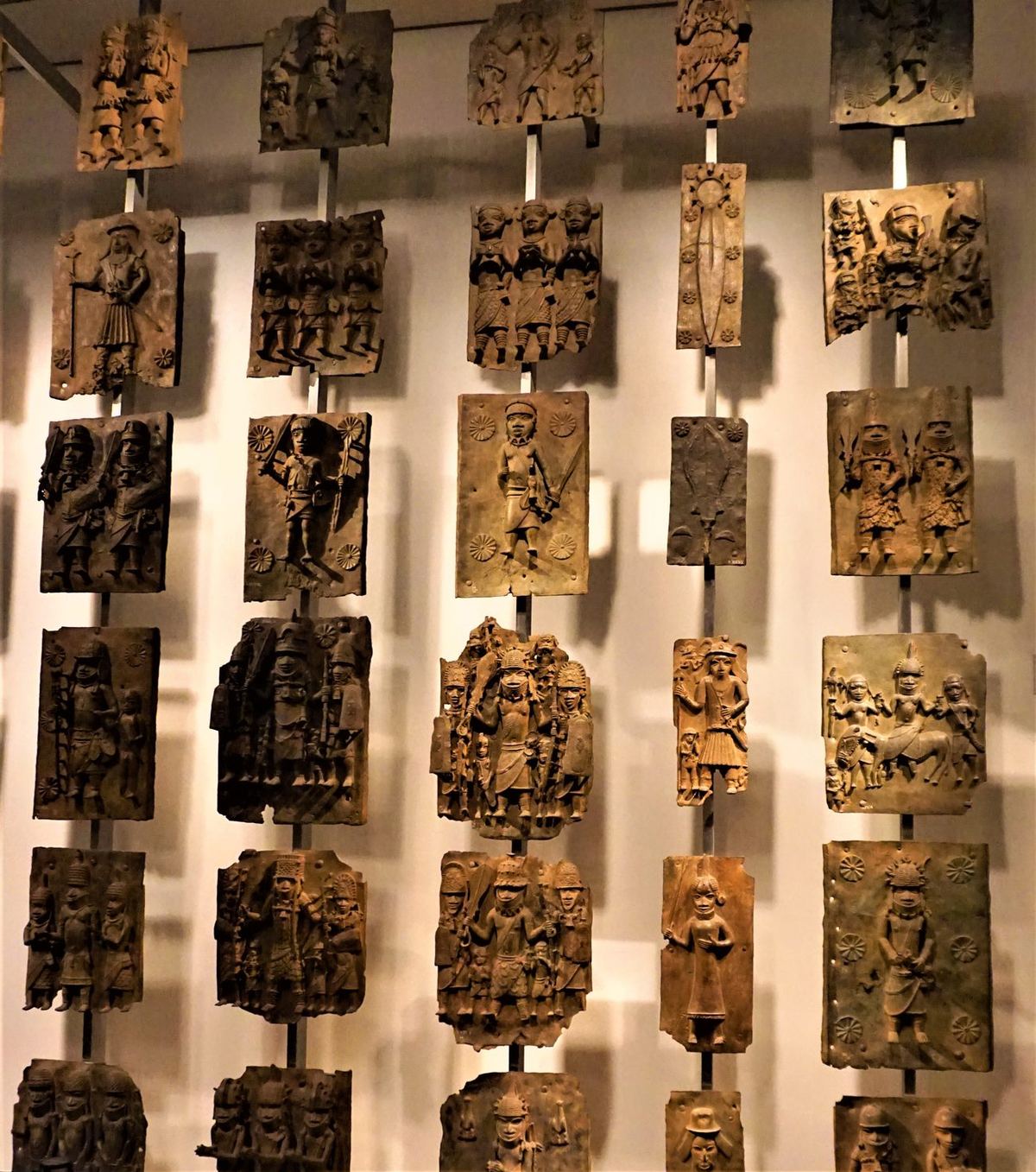
British Museum — photographed by Joy of Museums · CC BY-SA 4.0 — Cast by the lost-wax method in Benin City before 1897. Roughly 4,000 were looted by British forces and are still the subject of repatriation. View at source →
The City of Bronze
Benin City was one of the world’s great urban centres — described by a 17th-century visitor as wider than Amsterdam. Its royal palace was decorated with brass plaques cast by the lost-wax method: thousands of panels recording court life, wars and cosmology with a technical mastery European art historians refused to believe was African.
The Walls
The city and its hinterland were defended by an extraordinary system of earthen walls and moats — in total length, one of the largest earthworks ever raised by human hands.
The Punitive Expedition of 1897
A British force invaded Benin in 1897, burned the palace and carried off roughly 4,000 bronzes. The art that Europe refused to credit as African was suddenly priceless — and it has been at the centre of the repatriation debate ever since. Nigeria has secured the return of many pieces; thousands remain abroad.