🌊
The Igbo Landing, 1803
“75 People Who Chose Death Over Chains”
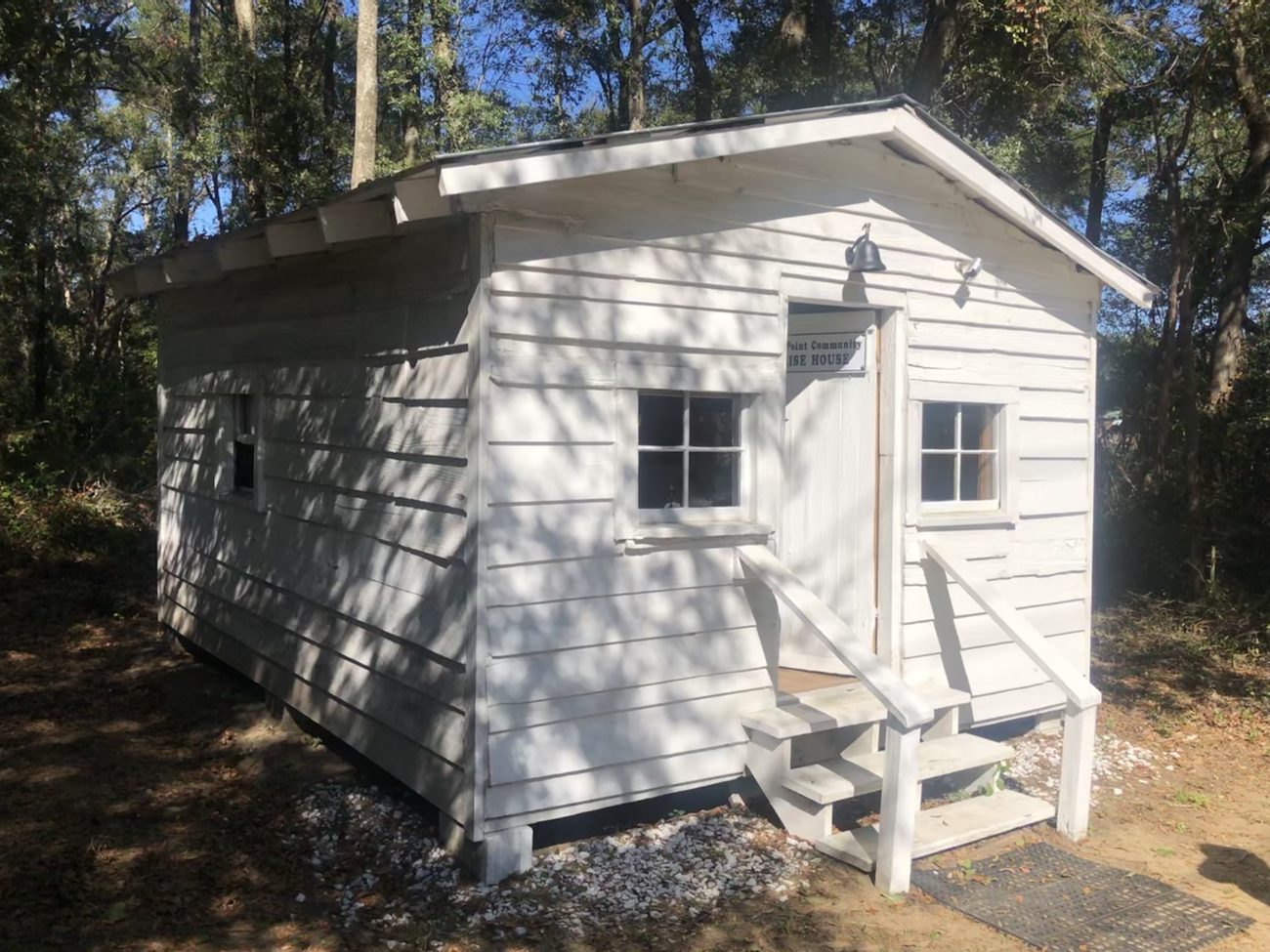
Coffin Point Praise House, St. Helena Island, South Carolina
Photograph, Wikimedia Commons · CC BY-SA 4.0 — Gullah Geechee heritage site. It was Gullah Geechee elders who preserved the memory of the Igbo Landing for 137 years before it was recorded in 1940. View at source →
Photograph, Wikimedia Commons · CC BY-SA 4.0 — Gullah Geechee heritage site. It was Gullah Geechee elders who preserved the memory of the Igbo Landing for 137 years before it was recorded in 1940. View at source →
Evidence: ✓ Contemporary newspapers + WPA oral history
DateMay 1803
PlaceDunbar Creek, St. Simons Island, Georgia
ShipThe York (often mis-reported as the Wanderer — that ship came in 1858)
EvidenceSavannah newspapers, court records, WPA Drums and Shadows (1940)
The Crossing
In May 1803, a cargo of Igbo captives from present-day southeastern Nigeria arrived in Savannah, Georgia aboard the slave ship York. They were bought by a plantation company and ferried to St. Simons Island.
The Walk Into the Water
At Dunbar Creek, the Igbo — according to the testimony collected in the 1930s — rose up, threw their overseers into the marsh, and walked into the water singing, rather than live enslaved. Contemporary accounts say some eighty were lost.
The Memory That Would Not Die
The event passed into the living memory of the Gullah Geechee people, who told it to WPA interviewers in 1940: “They walked into the water and were gone. Some say they flew back to Africa.” The site is now a place of pilgrimage for African American history.
What The Sources Say
⭐ Oral history archive
WPA Georgia Writers Project — Drums and Shadows (1940)
archive.org/details/drumsshadowssurv00geor — the foundational oral history
⭐ Academic monograph
Gomez, M. — Exchanging Our Country Marks (1998)
The Igbo reputation for choosing death over enslavement
⭐ Encyclopedic source
Georgia Encyclopedia — Ibo Landing
georgiaencyclopedia.org — the authoritative summary
💡 Did you know? The slave ship often named in this story, the Wanderer, actually landed Africans in 1858 — the 1803 ship was the York. Accuracy matters, and we tell you the difference.
This page is part of the AfriLore Encyclopedia — every claim labelled: ✓ Verified Fact · 🗣️ Oral Tradition · ⚖️ Historical Debate.
AfriLore Productions · The Voice of Africa · afrilore.org · © 2026 Lois Chukwu