🇬🇭 Ghana
Historical Photographs
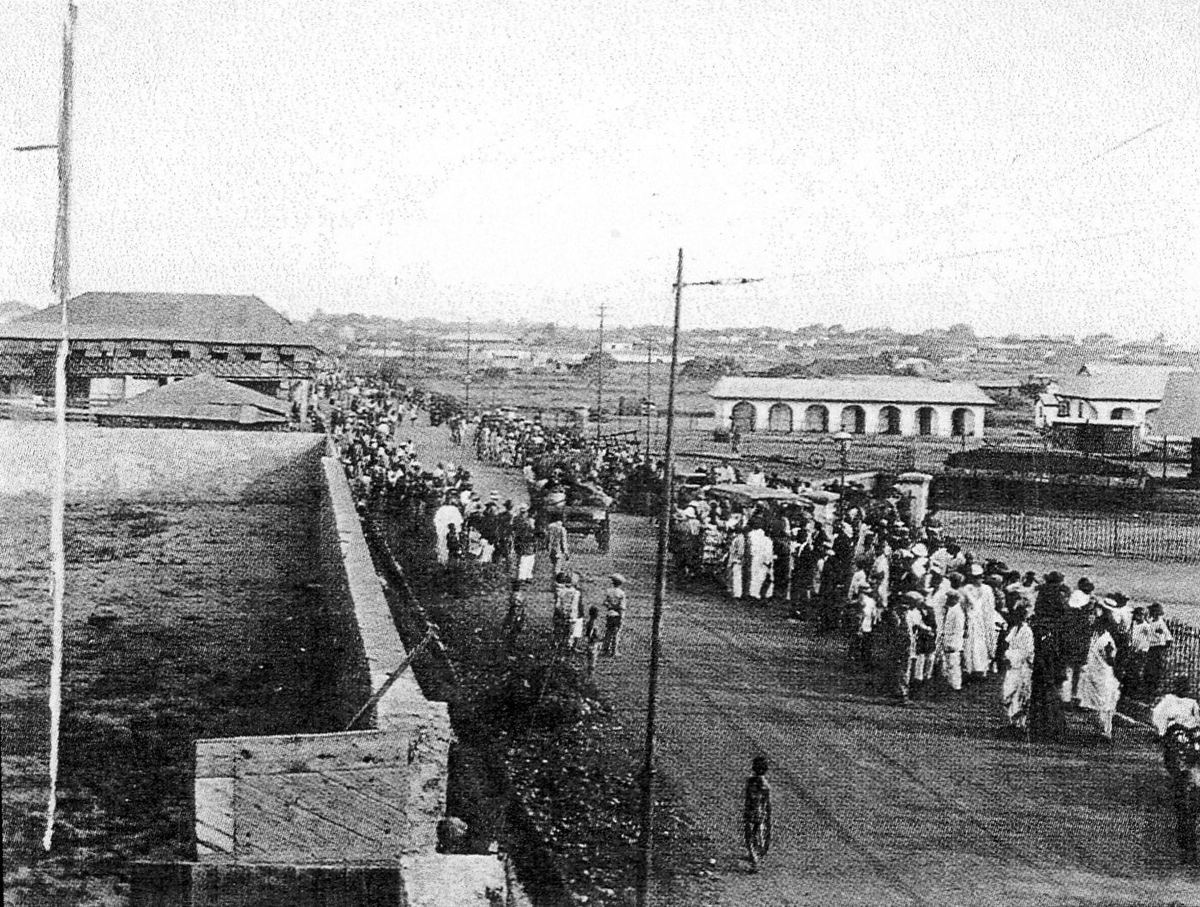
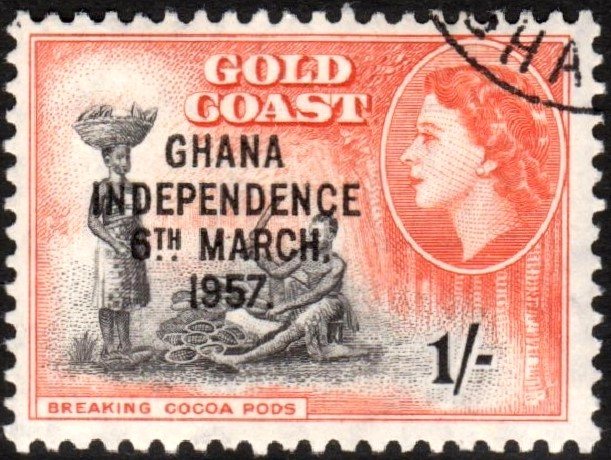
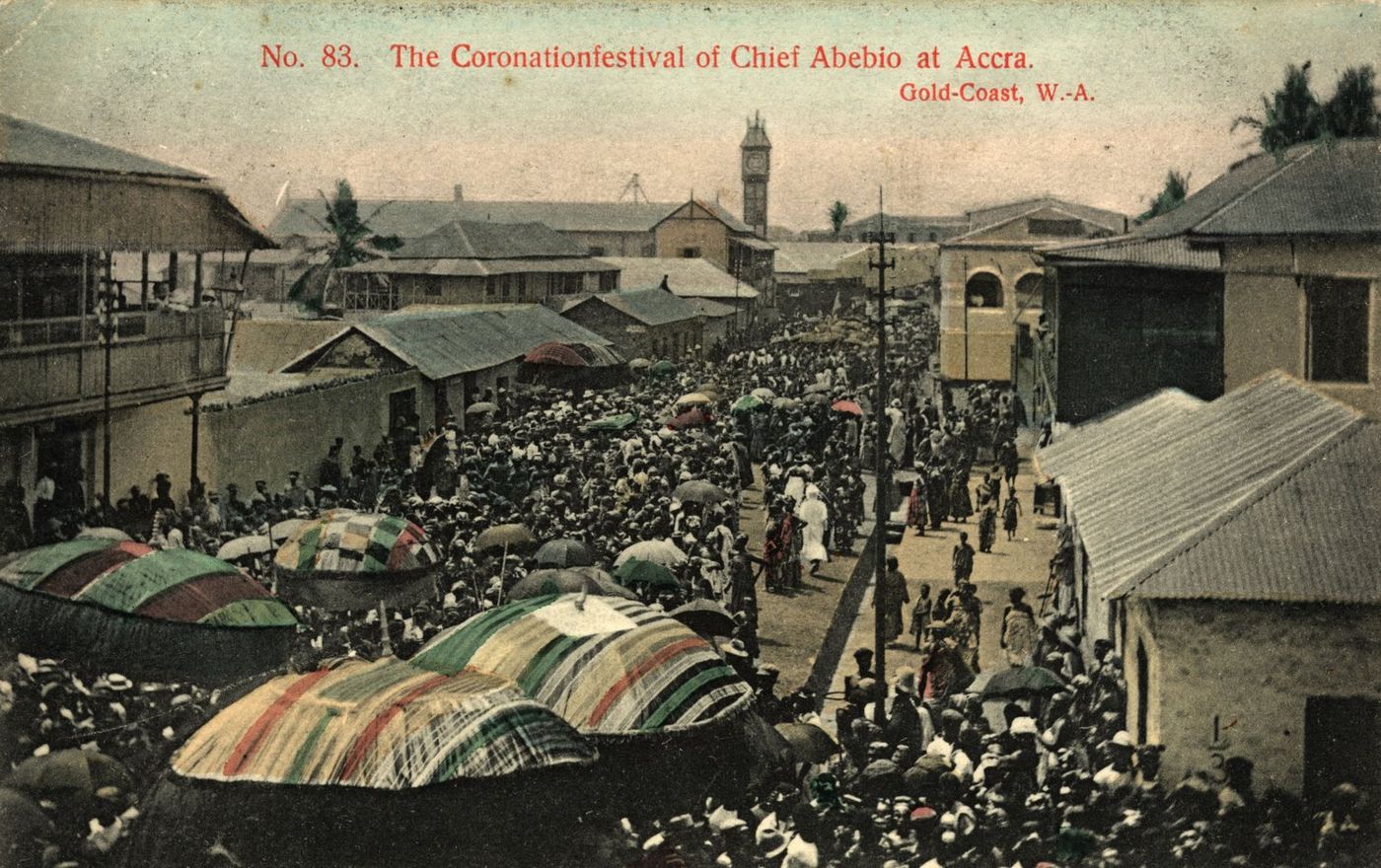
Real photographs from the archives — not reconstructions. Each image is public domain and credited to its collection. Grainy, damaged and imperfect: that is what history looks like.
Images sourced from Wikimedia Commons (public domain or CC0). Attribution and licence shown with each photograph.
Quick Facts
Before Colonial Rule
The Ghana Empire
The Soninke kingdom of Wagadu — which medieval Arab writers called Ghana, “land of gold” — dominated trans-Saharan trade from roughly the 8th to 13th century. Its legend of the serpent Bida survives in Soninke oral tradition.
The Ashanti Empire
From the late 17th century the Asante Union, welded together under Osei Tutu and the Golden Stool, became one of the most powerful states in West Africa, controlling gold, kola and slaves. Asantehene authority still endures today as a cultural institution.
Other states
The Fante coastal states, the Dagomba kingdom of the north, and the Ga city-states around Accra each had their own political systems and trade networks.
The Colonial Period
The Gold Coast
Britain built forts along the coast from the 17th century. In 1844 the Fante chiefs signed the Bond, effectively accepting British jurisdiction.
The Ashanti wars
Britain fought a series of wars against Asante between 1824 and 1900. In 1900, after the British governor demanded the Golden Stool, Yaa Asantewaa — Queen Mother of Ejisu — led the War of the Golden Stool.
Colony and protectorate
The Gold Coast became a British colony with the Ashanti and Northern Territories as protectorates. Nationalist movements grew after 1945, led by Kwame Nkrumah’s Convention People’s Party.
Independence & The Modern Nation
Independence, 6 March 1957
Ghana became the first sub-Saharan African colony to gain independence, after Nkrumah declared at midnight: “Ghana, your beloved country, is free forever.”
A republic, 1960
Ghana became a republic in 1960 with Nkrumah as president. His vision of Pan-Africanism made Accra a centre for African liberation movements.
Coups and democratic return
Nkrumah was overthrown in 1966. After alternating military and civilian governments, Jerry Rawlings ruled from 1981 until 2001, then handed over after two elected terms — setting a template for Ghana’s stability.
A democratic model
Ghana has since held repeated peaceful transfers of power, including in 2017 (Akufo-Addo) and 2025 (Mahama’s return).
Leaders & Heads of State
Every head of state since Ghana became independent — how each came to power and how each left. Dates are standard reference dates; where historians or records disagree, we say so.
| Leader | In office | How they came to power | How they left |
|---|---|---|---|
| Kwame Nkrumah | 1957–1966 | Prime Minister (1957–60), then President (1960–66) | Overthrown in a coup, February 1966 |
| Lt-Gen. Joseph Arthur Ankrah | 1966–1969 | Chaired the National Liberation Council after the coup | Resigned after a bribery scandal |
| Brig. Akwasi Amankwaa Afrifa | 1969 | Headed the military government briefly | Handed power to an elected government |
| Edward Akufo-Addo | 1970–1972 | Ceremonial President (elected) | Deposed in the 1972 coup |
| Gen. Ignatius Kutu Acheampong | 1972–1978 | Coup | Forced to resign by his own officers |
| Gen. Fred Akuffo | 1978–1979 | Took power after Acheampong’s resignation | Executed after the June 1979 coup |
| Flt Lt Jerry John Rawlings | Jun–Sep 1979 | Led the June 4 coup (Armed Forces Revolutionary Council) | Handed over to an elected president |
| Hilla Limann | 1979–1981 | Elected president | Overthrown, December 1981 |
| Jerry John Rawlings | 1981–2001 | Coup; then elected in 1992 and 1996 | Completed two elected terms and stepped down |
| John Agyekum Kufuor | 2001–2009 | Elected 2000; re-elected 2004 | Completed two terms |
| John Atta Mills | 2009–2012 | Elected 2008 | Died in office, July 2012 |
| John Dramani Mahama | 2012–2017 | Succeeded Mills; elected 2012 | Conceded defeat in 2016 |
| Nana Akufo-Addo | 2017–2025 | Elected 2016; re-elected 2020 | Completed two terms |
| John Dramani Mahama | 2025–present | Elected 2024; inaugurated 7 January 2025 | In office |
Modern & Present
Oil and growth
Ghana became an oil producer in 2010 (Jubilee field). Economic strains led to an IMF programme in 2022 and debt restructuring.
Politics
Ghana’s alternation between the NDC and NPP is often cited as one of Africa’s strongest democratic records.
Culture
Highlife and Afrobeats, kente weaving, Adinkra symbols, and the annual Homowo and Aboakyer festivals keep older traditions alive.
Go To The Archives Yourself
We show our sources — and these are the real archives where you can check us, free. Every archive below holds original photographs, documents and records.
People & Culture
Peoples
Akan (including Asante, Fante), Ewe, Ga-Dangme, Dagomba and others — more than 100 ethnic groups.
Language & symbols
Twi is widely spoken; Adinkra symbols carry proverbs and philosophy; the Golden Stool remains the sacred symbol of Asante unity.
Food
Banku and tilapia, jollof, waakye, fufu with light soup, kelewele.